The Weeknd's Super Bowl and the Grammy Boycott
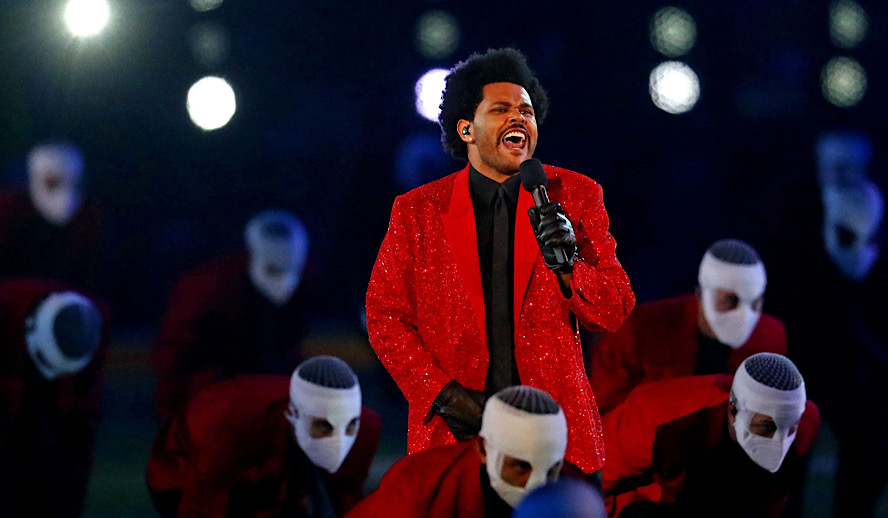
15. The Weeknd's Super Bowl and the Grammy Boycott
The snub came first: zero Grammy nominations for After Hours and "Blinding Lights" — one of the biggest commercial records of the era — and The Weeknd accused the Recording Academy's secret committees of corruption ("The Grammys remain corrupt"), pledging to stop submitting his music. Whether the snub was retaliation for his Super Bowl booking (a widely floated theory, never confirmed) became its own discourse thread. Then the show: a Super Bowl LV halftime performance at Raymond James Stadium — the mirror-maze sequence, the bandaged backup dancers, the meme-able spinning-camera moment — reportedly self-funded to the tune of $7M of his own money (his camp's reported figure; carry with the qualifier). The halftime show doubled as the anti-Grammy statement: the industry's biggest stage, booked outside the Academy's good graces. The discourse split between production-craft appreciation and the Grammy-reform debate, and the Academy later restructured its nomination process (later context). Socially, broadcast TV was the stage and Twitter the verdict space — the halftime show was 2021's last great monoculture TV moment before streaming fragmentation fully took over. The boycott pledge had teeth beyond rhetoric: by refusing to submit, The Weeknd removed the Academy's leverage over him, and the subsequent restructuring of the nominations process — the end of the secret committees he had attacked — gave the story an institutional ending. Whether the snub was punishment for the Super Bowl booking remains unconfirmed, but the timeline made the theory irresistible, and it became the default folk explanation across music Twitter.
- Why it went viral: The biggest snub in Grammy history answered with the biggest stage in American TV — plus a genuinely strange, meme-ready performance.
- Engagement signals: Zero nominations Nov 2020 (confirmed); boycott pledge (his words, reported Mar 2021); $7M self-funding = his camp's reported figure, qualifier required; halftime viewership not publicly reported as social metrics. Observed Sep 22, 2026.
- Sources: TheWrap — boycott pledge · PopCulture — fan reaction to halftime/Grammy snub
- Confidence: confirmed (snub, pledge quotes, performance); "corrupt" = his accusation, not a finding; retaliation theory = unconfirmed speculation
- Cross-year note: the Academy's later nomination-process changes (2021–22) are the institutional echo (see 2022 music dossiers).